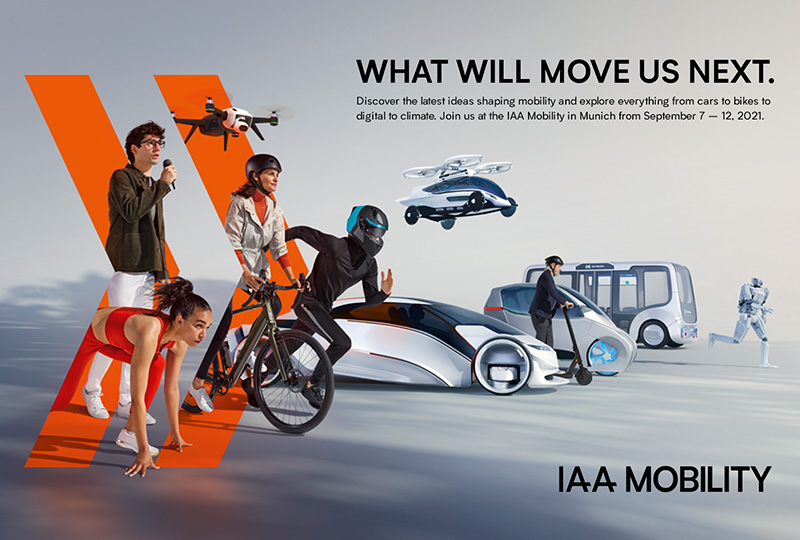
▲ Main poster for the IAA Mobility 2021. Source: IAA Mobility 2021
At motor shows, you can get an overview of the top trends that will define the auto industry over the next few years.
The Frankfurt Motor Show, in particular, was one of the five major motor shows in the world. Regarded as a technical show with an emphasis on the technical aspects of cars, it was also the center for German automakers.
Breakthrough car technologies, like diesel cars, front-wheel drive, and seat belts, were all first introduced at this show.
However, the show that has had such a profound impact on the auto industry finally reached the end of the road with organizers announcing the event has been cancelled.
The motor show has been reinvented into a mobility show!
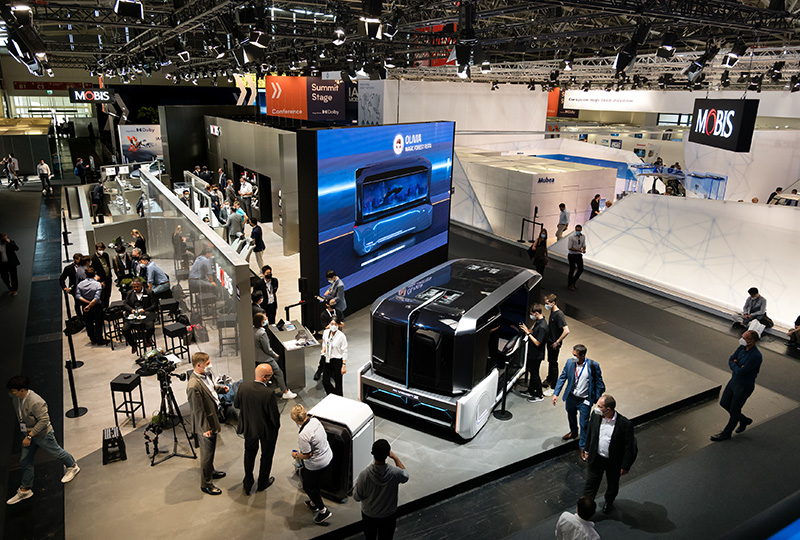
▲ The IAA Mobility held on Sept. 7-12, 2021 in Munich. Source: IAA Mobility 2021
The official name of the Frankfurt Motor Show is now the International Automobil-Ausstellung (IAA), or the International Mobility Show Germany. The VDA, organizers of the IAA, moved the venue for the show from Frankfurt to Munich 70 years after the event first began in 1951. It has also been given a new name, IAA Mobility.
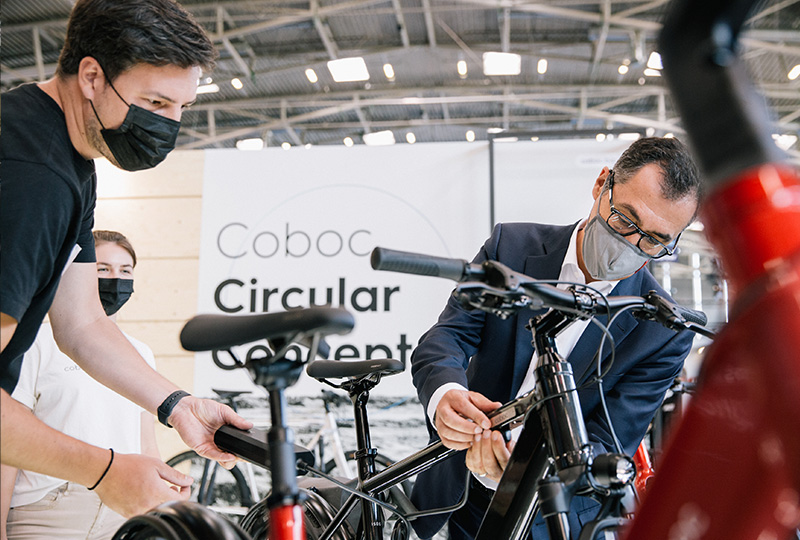
▲ IAA Mobility showcases not just cars, but also other different modes of transportation. Source: IAA Mobility 2021
This dramatic transformation into the IAA Mobility 2021 was seen as a symbolic event showing how the automobile industry that once focused on internal combustion engines is shifting into the mobility industry.
Why then did the VDA make such a decision?
CES heralds the transformation of the motor show
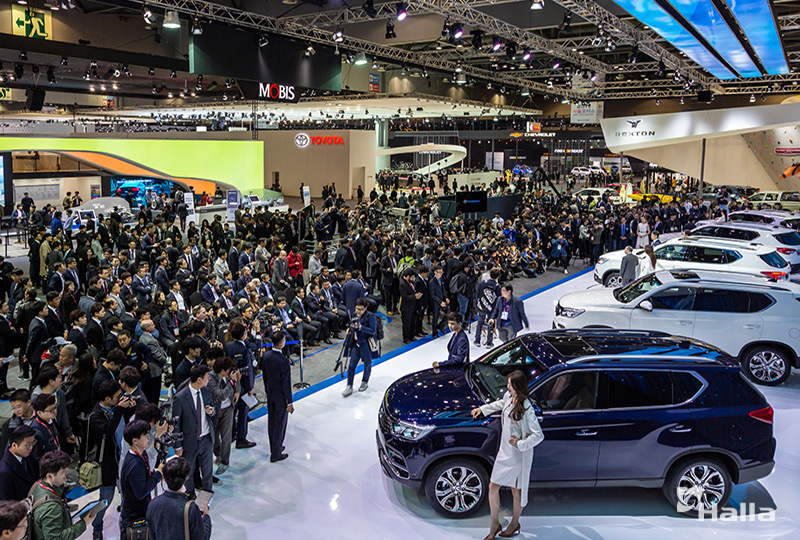
The industry has long demanded a change in the motor show.
Despite major advancements in-car technology, such as electrification and autonomous driving, the show remained simply as a place where carmakers announced their new models.
Inevitably, the auto industry’s dissatisfaction with motor shows only grew.
CES, the largest consumer electronics show in the world, noticed this.
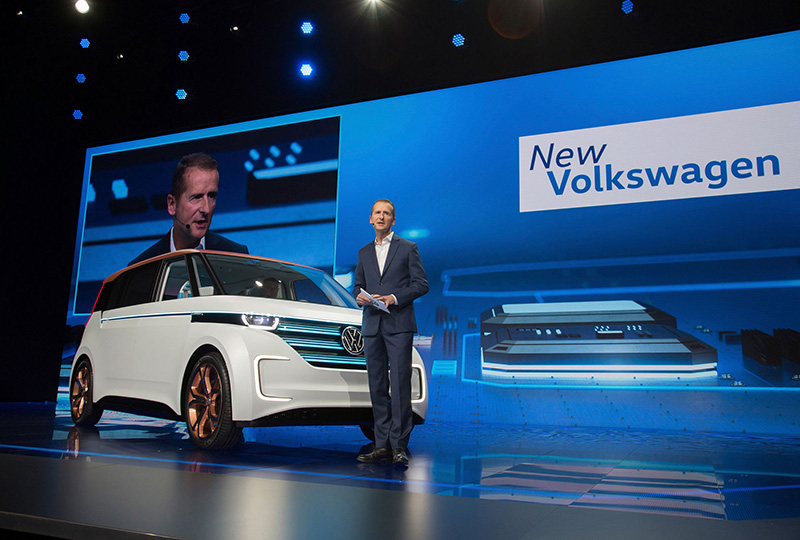
▲ Volkswagen scaled down their booth in motor shows and have taken part in the CES since 2015. Source: Volkswagen
CES focused on the convergence between automobiles and the IT industry.
Since starting in 2007, the show has provided booths concerning car technologies, showing where the future of the automotive and mobility industry was headed.
For carmakers, there was no reason to miss this opportunity.
The future-oriented nature of CES helped boost brand images.
It was also an ideal place to achieve synergy with the IT world.
This has led an increasing number of automakers choosing to take part in CES over motor shows.
Auto part makers were no exception.
Halla Group Chairman Chung Mong-won said in an interview, “In 2019, I attended the Frankfurt Motor Show and thought I wouldn’t need to come to car shows anymore because the motor show remained in the past, while CES is moving into the future.”
In 2017, nine car brands including Volvo, Jeep, and Peugeot did not join the show, and in addition to those brands, major manufacturers including Renault, Nissan, Toyota and General Motors from Japan and the US did not join the list in 2019 .
Subsequently, the number of companies participating in the show dwindled by 20% from the previous year. This led to the disappointment of the visitors and the number of spectators that reached as many as 810,000 in 2017 dropped to 560,000 in 2019, about half the number just two years ago.
¹ Renowned car makers have canceled plans to attend Frankfurt Motor Show, but why?
² Germany’s IAA forewarns of a neck-and-neck race to acquire future technology
The shift to electric vehicles in the motor industry

Carbon neutrality has also sparked change in the Frankfurt Motor Show.
As public sentiment against climate change has spread, the auto industry has come up against some strong criticism.
As a result, internal combustion engine vehicles, which have enjoyed a heyday of over a century as a key means of transportation, are slowly becoming obsolete.
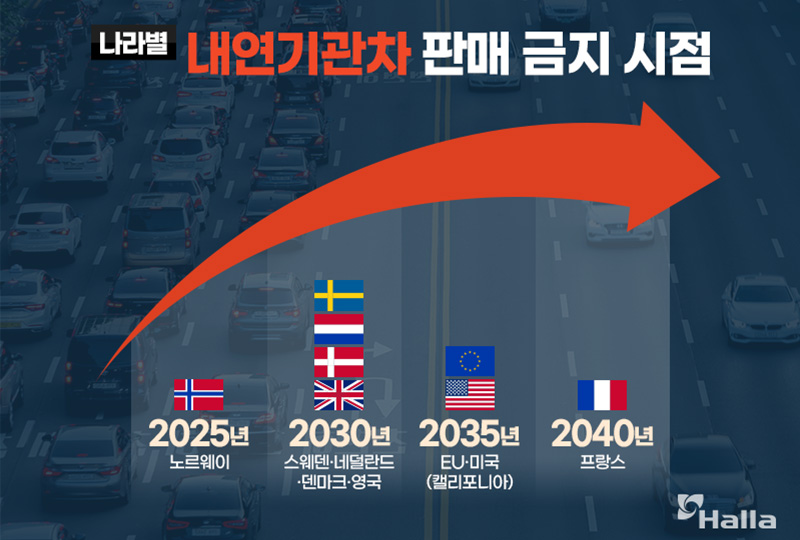
Starting in Norway, the sales of internal combustion engine vehicles will cease in 2025, followed by Sweden, the Netherlands, Denmark, and the UK in 2030, and in the EU and California in 2035.
Car makers are also accelerating the transition to green cars to win the race for electric cars.
Volvo has announced that it will become all-electric by 2030, and Volkswagen has said that it will increase the share of EV sales in Europe to 70% by 2030.
This has placed a lot of pressure on the VDA to change.
There was a sense of anxiety that they would cease to exist if they don’t turn away from the existing approach. This formed a basis to the argument that the show must be held under the framework of mobility.
Somewhere between acclaim and disapproval
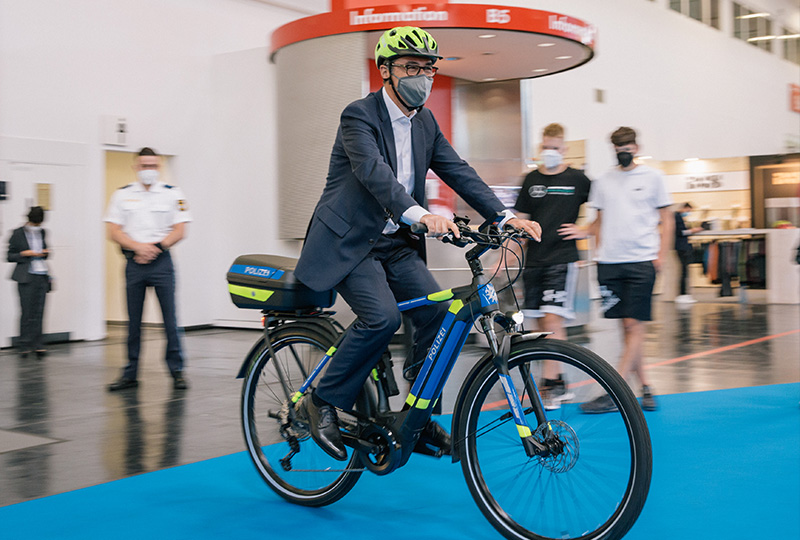
▲ The IAA Mobility encouraging citizen participation in experience zones. Source: IAA Mobility
The VDA chose “Digital and climate-neutral mobility of the future” as the overarching theme of the IAA Mobility 2021 and proposed a clear vision.
Participants also became more diversified than ever before.
A total of 744 companies, including 98 car manufacturers, 75 bicycle brands, and 152 car parts makers took part in the event.
They exhibited EVs, autonomous cars, motorcycles, bicycles, and drones that were rarely seen in the previous Frankfurt Motor Show, proving that it has made a drastic transformation from the past.
Echoing the characteristics of the venue, Munich, one of the biggest IT capitals in Europe and a smart city, IAA installed a number of spots in the city where people can experience the future of mobility.
Such an interesting mix has attracted high expectations from the industry, saying, “IAA Mobility will be a preview into the future landscape of the global automobile industry.”
However, after six days of the big gala in September, the show has also been receiving some contrasting views.
The VDA said that the IAA Mobility 2021 was a phenomenal success, with more than 400,000 who flocked to the first show that has been held since COVID-19 took hold. However, there was a controversy over police using tear gas and batons for their crackdown on protestors from environment and transportation groups. Moreover, the largest EV manufacturers in the world, Tesla, Peugeot, and Toyota did not come to the show, with critics saying that the sale of the exhibition was smaller than it was two years ago when some 500,000 people showed up.
The Frankfurt Motor Show chose innovation at the crossroads of tradition and change.
Now, which road will the major motor shows from automobile powerhouses, including Paris, France, Detroit, the US, Geneva, Switzerland, and Tokyo, Japan, choose?
The world awaits their response.